


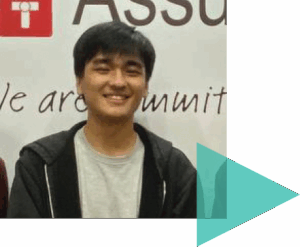
TAN YOCK LIM
Computer Science (2025)
Tan Yock Lim, a recent CCDS graduate, shares how the Work-Study Degree (WSDeg) programme helped him gain hands-on cybersecurity experience and secure a full-time role before graduation. From supporting IT audits and security testing to building confidence through real-world projects, Yock Lim’s journey highlights the value of staying open minded, starting early, and embracing continuous learning in a fast-evolving field.
WHAT MADE YOU CHOOSE TO PARTICIPATE IN THIS WORK STUDY DEGREE (WSDEG) PROGRAMME?
I first learned about the WSDeg programme through an email from the Career & Attachment Office (CAO), which invited the Year 2 cohort to a WSDeg information session. The email promoted an alternative pathway that allows students to gain industry exposure through multiple internship stints during their undergraduate years. This sparked my interest, as I was eager to apply the knowledge I had gained from my coursework in a real-world work environment. I also appreciated the opportunity to gain a competitive edge by securing a full-time role before graduation.
Additionally, participating in the WSDeg programme allowed me to count internship experiences during university breaks as Broadening and Deepening Electives (BDE) credits. As a student in the Accelerated Bachelor Programme, this helped reduce my workload during the semester and enabled me to focus more on my core modules.
WHAT WERE YOUR MAIN RESPONSIBILITES AS AN INTERN?
I interned at Assure IT, an SME that specialises in technology governance, risk, and compliance (GRC). As an intern, my main responsibilities involved supporting the team on various GRC projects, including IT audits, security testing, and cybersecurity advisory. I gained exposure to the full lifecycle of GRC projects, contributing to the planning, fieldwork, and reporting phases. These tasks often required conducting technical research on topics such as IT systems, networking, and cloud computing. At the same time, I was also tasked with familiarising myself with international cybersecurity standards like ISO/IEC 27001, which served as a baseline reference for enterprise-level cybersecurity practices. This experience provided me with a solid foundation in both the technical and compliance aspects of the cybersecurity domain.
WHAT WERE SOME CHALLENGES YOU FACED AND HOW DID YOU OVERCOME THEM?
One challenge I faced at the start of the internship was my lack of familiarity with IT audit and cybersecurity advisory work. Prior to the internship, I prepared myself through online cybersecurity courses that focused on security testing concepts such as vulnerability assessments and penetration testing. However, IT audit required a different skill set, including audit procedures, audit concepts, and governance frameworks. These areas were not covered in my coursework and differed significantly from my initial expectations of the industry.
To overcome this, I actively sought guidance from experienced colleagues who were approachable and often shared their experiences and learning resources with interns. They introduced me to key concepts in technology GRC, which helped me build essential foundational knowledge. Alongside hands-on experience from various projects, the internship provided valuable insights into the cybersecurity industry, enabling me to contribute more effectively as the internship progressed.
WHAT ARE YOUR KEY TAKEAWAYS FROM THIS PROGRAMME?
One of the most valuable takeaways from this programme has been the development of my soft skills, particularly in communication and teamwork. Effective communication is essential in any work environment, as it helps prevent misunderstandings and improves project coordination. Being able to structure my thoughts logically and present them clearly to others is a crucial skill. I am grateful for the opportunities to practice these communication skills, both internally with the team and externally with clients. This experience has boosted my confidence, and I now enjoy taking the lead in team discussions.
Participating in this programme also reinforced the importance of continuous learning. Through interactions with colleagues, I realised that cybersecurity is an ever-evolving industry where staying updated is essential. With guidance from my work supervisor, I was able to obtain cybersecurity certifications, and I am excited to continue learning through these professional certifications.
WHAT DO YOU LIKE ABOUT THIS INDUSTRY EXPERIENCE?
What I appreciate most about this industry experience is the flexibility of the programme. As a full-time undergraduate, I was able to work on real-world projects without disrupting my academic progress. This made the work enriching as I could apply the theoretical knowledge I gained in school to practical situations. It deepened my understanding of how technology is used in businesses and how systems are protected and maintained against cyber threats. This experience has motivated me to go beyond classroom learning and explore new areas in technology that I had not previously considered. It also gives me a competitive edge in securing full-time employment with the organisation upon graduation.
HOW DID CAO HELP YOU IN PREPARING FOR YOUR FUTURE WORK?
I have attended several cybersecurity-related sharing sessions by industry speakers organised by CAO. The speakers offered practical advice and career tips for those interested in cybersecurity, helping me identify current job trends and skills that employers are seeking. I attended these sessions in Year 2 and they provided me with a starting point for understanding how to pursue cybersecurity as a career.
SHARE ADVICE WITH YOUR PEERS.
My advice is to stay open-minded when exploring career paths. University is the best time to discover your true interests so avoid limiting yourself too early. Explore different roles through internships, projects or networking. Even if a role does not align with your long-term goals, understanding it can still provide insights into how different business functions operate. This broad perspective will not only help you make a more informed career choice but also improve your ability to collaborate effectively with people from diverse backgrounds.